Trichoderma for plants: the fungi that protect your roots
How Trichoderma protects plant roots from Fusarium, Rhizoctonia, and other soil pathogens. Mechanisms, application, and what to expect.
Last updated:
11 June 2026
Lina Avila Henao
Founder & Lead Consultant
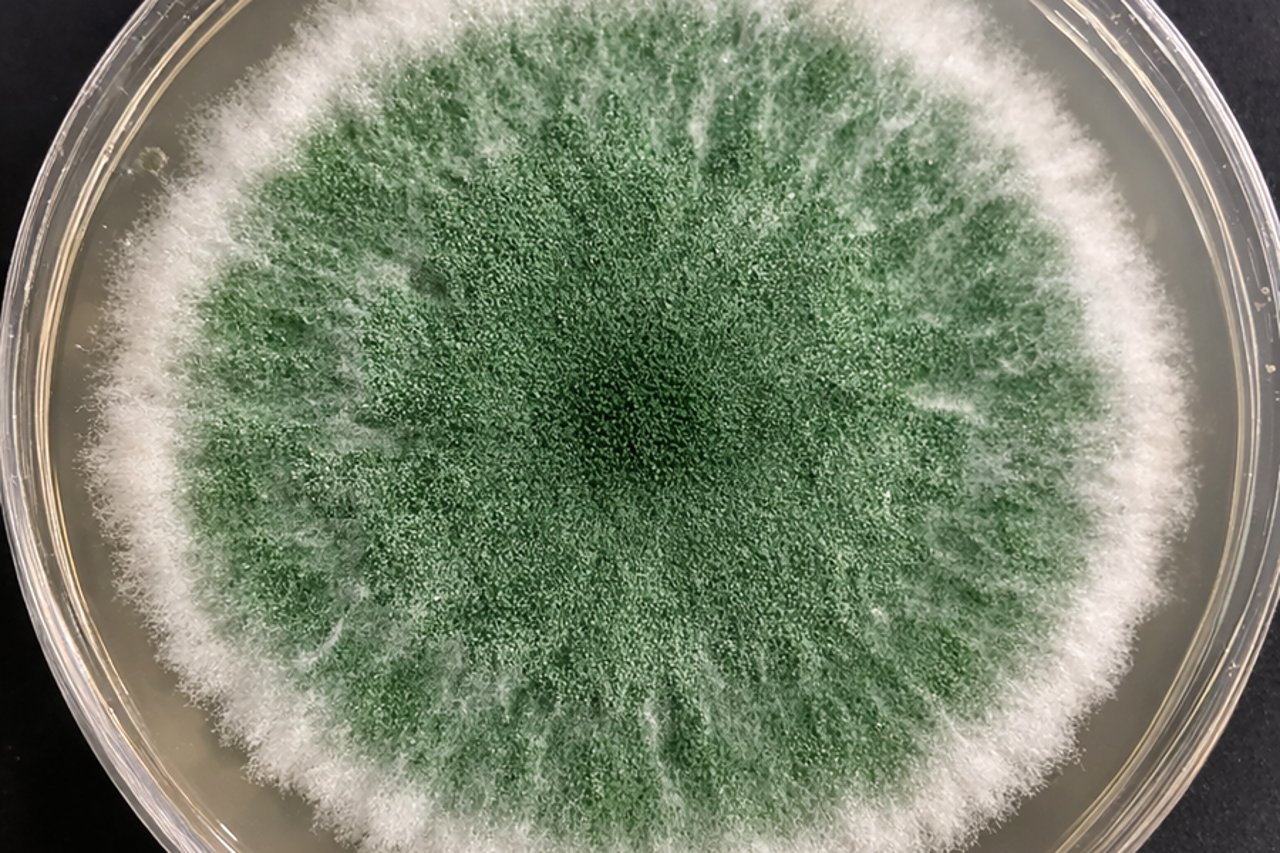
One of the most impressive things I have seen in a laboratory was a dual-culture plate with Trichoderma and Fusarium growing side by side. The Fusarium was the pink one, the kind that grows on rice, and at first both colonies were expanding normally.
But within days, the Trichoderma had completely inhibited the Fusarium's growth.
That image stayed with me. By day four the Trichoderma had not just slowed the Fusarium, it had grown directly over the pink colony and consumed it.
Trichoderma is one of the most studied and widely used biocontrol agents in the world (but do not worry if you have not heard about Trichoderma!), and understanding what it does, and what it does not do, could change the way you think about protecting your crops.
What is Trichoderma?
Trichoderma is a genus of fungi that naturally lives in soils around the world. It is incredibly common.
What makes Trichoderma special is its ability to interact with other organisms in the soil, particularly plant pathogens. It is actively competing, colonizing, and in many cases, directly attacking harmful fungi that damage crops.
There are many species within the genus, but the most commonly used in agriculture include Trichoderma harzianum, Trichoderma viride, Trichoderma asperellum, and Trichoderma atroviride. Each has slightly different strengths, but they share the same core abilities that make them valuable as biological tools.
How does Trichoderma protect plants?
Trichoderma uses several mechanisms to protect your crops, and this is what makes it particularly effective. It does not rely on just one mode of action.
Mycoparasitism. This is what I saw in that lab plate that I mentioned at the beginning of the post. Trichoderma can recognize, attack, and feed on other fungi. It coils around the hyphae of pathogenic fungi and secretes enzymes (chitinases, glucanases, proteases) that break down the cell walls of the target organism. It literally digests it. In a 2025 study published in the Journal of Phytopathology, Trichoderma harzianum isolated from tomato rhizosphere inhibited the growth of Fusarium solani, F. acuminatum, Rhizoctonia solani, and Phoma destructiva by 88 to 100 percent in dual culture assays after 5 to 7 days (Rashid et al., 2025).
Competition. Trichoderma is a fast and aggressive colonizer. It occupies space and consumes nutrients in the root zone before pathogens can establish themselves. Think of it as claiming the territory first. If Trichoderma is already there, there is less room and fewer resources for harmful fungi to grow.
Induced resistance in the plant. This one is less visible but equally important. When Trichoderma colonizes the root zone, it triggers a defense response in the plant itself. Research shows this involves two pathways: an early systemic acquired resistance (SAR) response mediated by salicylic acid in the first hours of root colonization, followed by induced systemic resistance (ISR) mediated by jasmonic acid and ethylene (Saravanakumar et al., 2017). The result is a plant that is more prepared to fight off pathogens, even in parts of the plant that Trichoderma has not directly contacted.
Root growth promotion. Trichoderma does not just protect roots. It helps them grow. Several species produce plant growth-promoting compounds, including auxin-like molecules and volatile organic compounds, that stimulate root development. More roots means better nutrient and water uptake, which translates into a healthier, more resilient plant overall.
What pathogens does Trichoderma target?
The list is long, and that is part of what makes Trichoderma so appealing to farmers. The most common targets include:
- Fusarium species, responsible for wilt and root rot across a wide range of crops including tomatoes, bananas, cereals, and ornamentals. In a maize field study, T. harzianum strain CCTCC-RW0024 reduced Fusarium graminearum populations in the rhizosphere by 66 percent and disease severity by nearly 87 percent (Saravanakumar et al., 2017).
- Rhizoctonia solani, a soil-borne pathogen that causes damping-off in seedlings and root rot in many crops.
- Sclerotinia sclerotiorum, the white mold fungus, a serious problem in crops like lettuce, soybeans, and sunflowers.
- Pythium species, another cause of damping-off, particularly in wet or overwatered conditions.
- Botrytis cinerea, gray mold, common in grapes, strawberries, and greenhouse crops.
The key point is that Trichoderma is not a one-target solution. Its broad activity against multiple soil-borne pathogens makes it a versatile tool in any crop protection program.
How is Trichoderma applied?
Trichoderma products come in several forms (wettable powders, granules, liquid suspensions, and seed treatments). The application method depends on the crop, the target pathogen, and the product formulation, but the most common approaches are:
Seed treatment. Coating seeds with Trichoderma spores before planting ensures the fungus is right there in the root zone from day one. This is one of the most effective methods because it gives Trichoderma a head start in colonizing the root environment before pathogens arrive. A 2025 study on maize showed that T. harzianum seed treatments reduced ear rot severity, increased grain yield, and lowered mycotoxin contamination compared to untreated and chemically treated controls in two-year field trials (Pajčin et al., 2025).
Soil application. Applying Trichoderma directly to the soil, either as a drench or incorporated into the growing medium, works well for established crops or transplants. This is common in greenhouse production and nurseries.
Foliar application. Less common for Trichoderma, but some formulations are designed for above-ground use, particularly against pathogens like Botrytis.
What does Trichoderma need to work?
Like any living organism, Trichoderma has favourite conditions. Understanding these is the difference between a product that works and one that disappoints.
Moisture. Trichoderma needs adequate soil moisture to germinate and colonize. Extremely dry soils will limit its activity. If you are in a dryland system, timing your application with irrigation or rainfall makes a significant difference.
Temperature. Most Trichoderma species grow well between 20 and 30°C. Some strains tolerate higher temperatures, but extreme heat can reduce spore viability. Apply during cooler parts of the day if temperatures are high.
Organic matter. Trichoderma thrives in soils with good organic matter content. Organic matter serves as a food source and supports the microbial community that Trichoderma integrates into. In highly degraded soils with very low organic matter, results may be slower.
Compatibility with fungicides. This is critical. If you are using chemical fungicides in your program, some of them will kill Trichoderma. Always check product compatibility. A common practical recommendation is to leave 5 to 7 days between a chemical fungicide application and a Trichoderma application, although the exact interval depends on the fungicide. Triazoles and broad-spectrum products tend to be more harmful to Trichoderma than copper-based or contact fungicides. Consult the label or the manufacturer when in doubt.
What Trichoderma is not
I want to be honest here, because overpromising is one of the biggest problems in the biologicals industry.
Trichoderma is not a magic bullet. It will not rescue a crop that is already heavily infected with a soil-borne disease. It is a preventive and protective tool. It works best when applied before the pathogen establishes, not after.
It is not a replacement for good agronomy. If your soil management is poor, your irrigation is inconsistent, or your crop rotation is nonexistent, Trichoderma alone will not fix those problems. It works as part of an integrated system.
Results are not always immediate. Unlike a chemical fungicide that acts on contact, Trichoderma needs time to colonize, establish, and build its presence in the root zone. Patience and proper application are essential.
Final thought
Trichoderma is one of the most accessible and well-proven biological tools available to farmers today. It protects roots, enhances growth, and fights some of the most damaging soil-borne pathogens in agriculture.
But like any biological product, it requires understanding. It requires proper application. And it requires realistic expectations.
If you give it the right conditions, Trichoderma can become one of the most reliable allies in your crop protection program. It is something I have seen with my own eyes in the lab and in the field.
Lina Avila Henao
Founder & Lead Consultant