Rhizobium in Australia: Why its inoculant system works so well
Australia is a global reference point for Rhizobium inoculants. A look at the conditions, institutions, and quality systems behind biological nitrogen fixation done well.
Last updated:
17 May 2026

Lina Avila Henao
Founder & Lead Consultant
Australia is one of the countries most often cited as a reference point in Rhizobium research and biological nitrogen fixation. That reputation did not come from a single breakthrough. It came from a combination of environmental pressure, sustained scientific investment, and a quality control system that few other countries have matched.
This article looks at the factors behind that reputation, what producers elsewhere can learn from it, and where Australia sits relative to Brazil, the other major reference point in the field. It also includes some of my own experience working with Rhizobium in the lab and the greenhouse.
What Rhizobium does, briefly
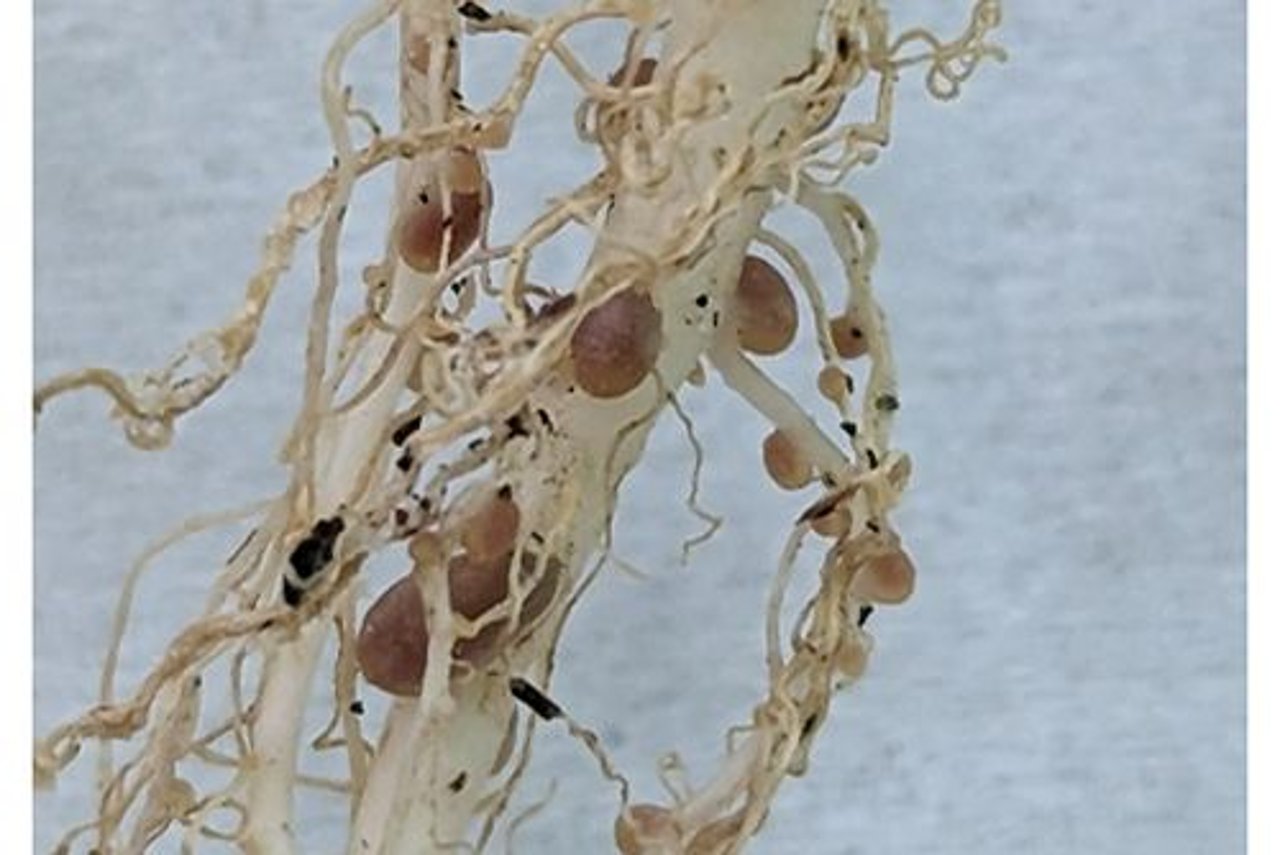
Rhizobium is a genus of soil bacteria that forms a symbiotic relationship with legume roots. The bacteria colonize the root, trigger the formation of nodules, and inside those nodules they convert atmospheric nitrogen into a form the plant can use. In exchange, the plant supplies the bacteria with carbon. When the match between the bacterial strain and the legume is a good one, this symbiosis can supply most or all of the nitrogen the crop needs, reducing or eliminating the need for synthetic nitrogen fertilizer.
The key phrase there is when the match is a good one. Not every Rhizobium strain works well with every legume, and that single fact is the foundation of everything that follows.
1. Agricultural conditions that made inoculation necessary
Agricultural legumes in Australia are largely introduced species, brought in after European colonization. Australian soils often lacked rhizobia compatible with these introduced legumes, which meant farmers could not rely on native soil bacteria to nodulate their crops effectively.
When a legume forms nodules with an ineffective strain, the result is poor nitrogen fixation and poor plant performance. The plant looks nodulated, but it is not getting what it needs.
This biological mismatch meant that inoculation was not optional in Australian agriculture. It was a requirement from early on. And when a farming system has no choice but to rely on microbial inoculation, it tends to develop the knowledge and infrastructure to do it well.
2. A long commitment to biological nitrogen fixation
Australia has invested in sustainable approaches to soil fertility for decades. Rhizobium-based inoculants reduce dependence on synthetic nitrogen fertilizers, which are costly and carry a significant environmental footprint. Biological nitrogen fixation supports productivity while reducing greenhouse gas emissions associated with fertilizer manufacture and application.
This is not a recent shift. Australia has operated an organized inoculation system since the mid-1950s, in which strains are collected from regions of the world with similar soil and climate conditions, then screened for effective nitrogen fixation with target legumes. That long timeline is part of why the system is as refined as it is.
3. Institutional investment and strain collections
Sustained institutional support has been central. Organizations including the Grains Research and Development Corporation (GRDC) and CSIRO have consistently funded microbial and soil health research, and research groups such as the Centre for Rhizobium Studies at Murdoch University have developed elite strains adapted to difficult conditions, including acid soils.
The Australian Legume Inoculants Research Unit maintains a collection of more than 1,700 rhizobial strains, supplied on request to researchers in Australia and internationally. The GRDC has described its investment in this area as building one of the largest rhizobia collections in the world. A working strain collection of this size is a research asset: it is the raw material from which better-matched, better-performing inoculants are developed.
Much of the current research focuses on determining compatibility between specific Rhizobium strains and specific legume species, so that producers can be matched with the inoculant best suited to their crop and their soil.
4. The Green Tick: independent quality control
One of the features that most distinguishes the Australian system is the Green Tick.
In Australia, formulated inoculants that contain approved Rhizobium strains can carry the Green Tick, a certification mark backed by independent testing from the Australian Inoculants Research Group (AIRG). A product carrying the Green Tick is verified to contain the correct strain and at least the minimum number of viable rhizobia stated on the label, at the point of manufacture.
The strains used in Green Tick products go through an evidence-based selection process overseen by the National Rhizobium Steering Committee and the AIRG. Manufacturers also have to provide clear storage and handling instructions, so the bacteria stay viable along the supply chain.
This matters because inoculants are living products. A bag of inoculant that contains the wrong strain, or too few viable bacteria, or that has been stored badly, will underperform regardless of how good the underlying science is. The Green Tick is a system designed to close that gap between laboratory science and what actually reaches the farmer.
5. How Australia compares to Brazil
Australia is not the only reference point in Rhizobium research. Brazil is the other, and the two countries offer an interesting contrast.
Brazil is the world's largest producer and exporter of soybean, and biological nitrogen fixation is central to that position. Decades of research, much of it through EMBRAPA, have made inoculation standard practice. Microbial inoculation is now used on roughly 80% of the soybean area in Brazil, and the practice is estimated to save the country billions of dollars annually in nitrogen fertilizer imports.
The contrast with Australia is in the regulatory model. Australia operates a centralized quality assurance system built around a single approved strain per legume group and independent testing through the AIRG. Brazil operates with a larger, more decentralized industry: it has registered over six hundred inoculant products, and annual inoculant sales reach approximately 120 million doses. That scale has driven rapid innovation and a large commercial market, with quality assurance handled through national legislation rather than a single centralized strain authority.
Neither model is simply better than the other. Australia's system prioritizes consistency and verification. Brazil's system prioritizes scale and market development. Producers and entrepreneurs looking at how to build a biologicals sector can learn different lessons from each.
6. My experience with Rhizobium
In my own work with Rhizobium, I have been involved in both lab-scale production and greenhouse trials.
On the lab side, I worked on producing Rhizobium leguminosarum strains: culturing them under controlled conditions, preparing inoculants, and checking cell viability. That work is precise and process-driven, and it teaches you how fragile these products are if conditions are not right.
It was in the greenhouse that the concepts became tangible. I worked on a trial involving Rhizobium leguminosarum and clover (Trifolium spp.), where we observed nodule formation and its effect on plant development. Seeing effective inoculation influence root development and overall plant vigor made the abstract idea of symbiosis concrete.
What stood out most was not simply that nodules formed. It was how the quality of the association translated into visible differences in the plants: stronger root systems, more uniform growth, healthier-looking crops. The contrast between a well-matched inoculation and a poor one was visible to the eye.
That experience reinforced something the Australian system is built around: strain selection and compatibility are not technical details. They are the difference between an inoculant that works and one that does not.
Final thoughts
What stands out about the Australian approach to biological nitrogen fixation is the combination of factors: research depth, consistency, precision, and a long-term view of soil fertility.
By maintaining well-characterized strain collections, funding field-relevant research, and running an independent certification system in the Green Tick, Australia has built an environment where Rhizobium inoculants are not only available, but verifiable and reliable. For any country or company trying to build a credible biologicals sector, that combination is the lesson worth studying.
Lina Avila Henao
Founder & Lead Consultant